Posts Tagged With: #writerslife

Juggling Teacups

“Imagine life is a game in which you are juggling five balls. The balls are called work, family, health, friends, and integrity. And you’re keeping all of them in the air. But one day you finally come to understand that work is a rubber ball. If you drop it, it will bounce back. The other four balls – family, health, friends, integrity – are made of glass. If you drop one of these, it will be irrevocably scuffed, nicked, perhaps even shattered. And once you truly understand the lesson of the five balls, you will have the beginnings of balance in your life.”
— James Patterson (Suzanne’s Diary for Nicholas)

I juggle teacups, some are beautiful, others functional. Some days, I’m juggling three and other days it feels like a dozen. I had too many in the air, and as Mr. Patterson noted, when the cups fall, they are damaged or broken beyond repair. I didn’t just drop one, I dropped all of them.

Every . . . single . . . one.

At first, I tried to scoop everything up, carrying the whole and the damaged, and carry on. It didn’t work, ideas became confused, tasks forgotten, appointments missed. Then the “safer at home” order came down. With the doors of my place of employment locked, friends distancing themselves, meetings canceled, I found myself forced to stop and reevaluate the chipped and shattered pile of teacups.

David Segrove wrote, “Do three things well, not ten things badly.” With that in mind, I began to shift through the debris. Which needed to be repaired, replaced, or put in the rubbish. Each cup evaluated. Did it “spark joy” (to borrow a phrase from Maria Kondo), would I miss it, was it necessary, or was it a burden to be left in the dust bin?

Let’s examine a few of the cups I kept.

Writing – I write because if I didn’t, the choir in my head would drive me insane, telling me their stories. Writing quiets them and creating a world for them to exist in, whether a real historical time and place or a steampunk world that never will exist, is fun. Some stories have been abandoned, crying out to be finished. This cup is a sturdy mug, it just needs to be dusted off, the little chip is barely visible.

Gardening – Hands in the soil, birdsong over-head, flowers and vegetables growing. The harvest is small but a peaceful time. This cup is metal, so it has a few dents, but it is still serviceable.
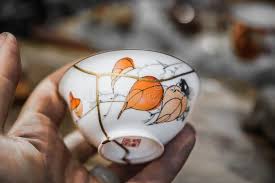
T’ai Chi – Ancient, moving meditation, improver of health and well-being. I am at my best when doing this slow quiet martial art. The cup was broken, the cracks large, but it can be repaired. I will use the technique of kintsukuroi, the Asian art mending the pottery by filling the cracks or breaks with gold or silver lacquer so as not to hide the damage but rather illuminate its beauty.

American Legion – I am a veteran, Desert Storm era. I came through my time with little baggage to carry. My comrades, some were not so lucky. The cup is tough, the handle is cracked but can be mended. Even though this is a heavy cup, it is one of honor and duty.

There are others, but this time I have built a shelf for them. There will be times when I will place a cup lovingly down, rest is a good thing.

What of those that have been swept away, the remains now in the waste basket? Will I miss them? Will I feel the need to replace them? Only time will tell.
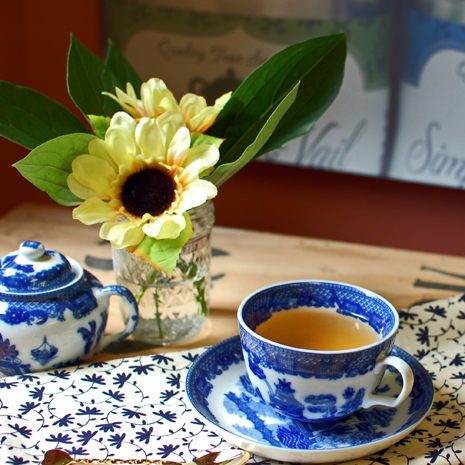
I am learning to juggle everything well, most days, on other days there’s always tea.  Those are the days I understand the line from Douglas Adams’ Hitchhiker’s Guide to the Galaxy (screenplay), “A cup a tea would restore my normality.”

Until next time . . . The door is always open and the kettle always on.

Categories: Uncategorized | Tags: , , , , , , , | 1 Comment

Books to Write By


books-1757734_1280

Writers are always working to hone their craft. We never stop looking for ways to reach beyond our natural gift of storytelling. It can be taking formal course work to pursue an MFA (Master of Fine Arts) or attending conferences, but it can also be to listening comments of other writers as they critique our work, or working with a mentor.

I have also found books on the topic of writing to be helpful. There are a few old favorites that I return to when I have a question or need to review.

Earlier this week, someone asked me which “writing books” I have found helpful, so here are seven of my “go to” books:

WritersJourney3rddrop

The Writer’s Journey by Christopher Vogler: Inspired by the work of Joseph Campbell,  Mr. Vogler take you through the fundamentals of the hero’s journey, character archetypes, and power of myth to tell a compelling story. I found that even romance stories have these elements which have been used by storytellers since we first gathered around the fire and spun tales to entertain and educate.

final_no_plot_no_problem_cover

No Plot, No Problem by Chris Baty: Written as a resource for National Novel Writing Month  Mr. Baty takes you through the process from the blank page to the first draft in thirty days. Written with humor and solid advice, I found it got me through the first draft of my first novel without going crazy.

Firsts-in-Fiction-by-Aaron-D.-Gansky-187x300

Firsts in Fiction: First line Hooks, Hints, and Help by Aaron Gansky:  This slim volume looks at that all important first line of your story. As a writer and teacher, Mr. Gansky uses this little book to make the process a little less scary. Beautiful examples of the worst and the best first lines are given in the text.

irresitible

The Irresistible Novel by Jeff Gerke:  We all want to write that “can’t put down” book. Mr. Gerke takes you through “the rules” of writing. He explains the reason for the rule, gives arguments for and against, and then lets you decide if you want to follow or break the rules. He also discusses how to emotionally engage your reading and psychology of storytelling from Jung to Campbell.

These last two are by the same author, James Scott Bell. It was hard to narrow down which of his excellent books in my library which to choose. As an author and instructor, all of his books are informative.  Here are my two favorites –

middle-cover-w003aborder

Write Your Novel from the Middle  – This looks at the structure of the novel, finding that one point in the middle that defines what the story is all about. When I used this to do the last draft of my novel The Princess of Sweetwater, it took on a new, unanticipated direction when I defined the “mirror moment” in the story, and I fell in love with it all over again.

how-to-write-short-stories-cover

How to Write Short Stories and Use Them to Further Your Writing Career – This is one of the newest additions to my library. After participating in a webinar about the book, I decided to purchase it. Writing short for me is a challenge, rarely are my stories shorter than seven thousand words. Since reading this, I have finished two short stories and am submitting them to anthologies.

So how do I chose which ones to plunk down my hard earned cash and take home to read? A quick search online reveals thousands of books on how to write anything. It’s hard to narrow it down. I look for books written by people I like and respect.  If a book is written by someone I’ve never heard of, I will do a little research into who they are and what their credentials are. Also, I have found that recommendations from my writer friends often prove to be good choices.

What are some of your favorite writing craft resources? List them in the comments below.

Until next time . . .

The door is always open, and the kettle is always on.

Categories: Uncategorized | Tags: , , , , , , , , | 2 Comments

Blog at WordPress.com.