Posts Tagged With: #WIP

The Tale of Two Boarding Houses

This is the tale of two boarding houses in Raton, New Mexico. I had gone to this town in northeastern New Mexico to traverse the territory that Sally Porter lived in 1898. Who is Sally Porter, you may ask? She is the protagonist of my current work-in-progress (WIP).

While in Raton, I learned about two boarding houses that were in operation in the 1890s. The first is now a bed & breakfast called Heart’s Desire, where I stayed for several days. Situated near the heart of the town, it’s location was perfect. The historic district, quaint shops, a museum, and the library were all within walking distance.

The house, painted sweetheart pink, was built in 1895 by the first U.S. Marshall of Raton and served as a boarding house run by his wife. She not only fed the residents but also cooked the meals for the occupants of the jail. The footpath between the house and where the jail once stood is still visible. One story is that when the jailhouse was full, the sheriff would lock prisoners in the house’s carriage house.


The hostess, Barbara Riley, has restored the house and decorated each room with a delightful theme, showing off the place in Victorian splendor. Upon my arrival, she greeted me with a warm slice of apple pie and cup of tea. After the refreshments and conversation, I was shown my room, the Blue Willow Room. It had a lovely view over the town’s historic buildings and the fall foliage.

Each morning, I was treated to some of the best cooking I have ever had while traveling. Barbara put a lot of love into each breakfast she served. It fortified me as I headed out on my adventures for the day. On my return in the evening, I was greeted by the official welcome committee, Guinness, a sweet-tempered Yorkshire terrier. I would settle into one of the couches in the sitting room with a cup of tea and write up my notes for the day listening to Barbara play the piano.

I felt very spoiled.

I would recommend stopping for a night or two at the Heart’s Desire Bed & Breakfast. Barbara’s enthusiasm and knowledge of the area, the comfortable environment she created, and the location made this pleasant stay. It is also pet-friendly and has wi-fi.

Let me introduce you to proprietress of the second boarding house, Cathay Williams –slave, domestic worker, soldier, and businesswoman.

Cathay was born a slave in 1844. At the start the Civil War, she was on a plantation on the outskirts of Jefferson City, Missouri. When Union soldiers marched in she was considered “contraband,” and like many slaves, she was pressed into service as a cook and laundress. At one point, she was transferred to Washington D.C., where she served as a cook for General Philip Sheridan.

After the war, Cathay found herself unemployed, and with no money and few opportunities, the tall, lanky woman made a drastic decision. She posed as a man and joined the army, using the name William Cathay. She was assigned to the 38th Infantry Regiment, one of six all African-American regiments that would become known as the Buffalo Soldiers. She was hospitalized several times during the nearly two years she served and was never examined closely enough to discover her secret until she let it slip. She was given a medical discharge in 1868.

After her discharge, Cathay joined family members in Colorado, where her mother was a matron at the Lincoln Home for orphaned and abandoned black children. The one known photograph of her was taken during this time in Pueblo. Then she moved to Trinidad where she worked as a seamstress. While there a reporter from Saint Louis came to visit her, after hearing rumors of a black woman soldier. Her story was published in The St. Louis Daily Times in 1876. Shortly after her story was published, she became ill, suffering from neuralgia and complications from diabetes. In 1893, she applied for an army pension, as had Deborah Sampson, who served as a man during the American Revolutionary War. Her claim was denied, despite her having to walk with a crutch (her toes had been amputated.)

Many biographies of Cathay Williams report that she must have died shortly after her 1893 pension claim was denied as her absent from the Trinidad census rolls of 1900. But according to two sources I spoke with in Raton, this is not the case. Both the historian at the Raton Chamber of Commerce and the curator of The Raton  Museum reported that she moved from Trinidad to Raton, where she lived the last three decades of her life. According to them, she ran a boarding house. However, it’s location is not identified on any period maps. She offered room and board to the local railroad workers, and when General Sheridan’s son passed through the area, he stopped and stayed with her a few days.

Williams died in Raton in 1926 at the age of 82. Her body is thought to have been returned to Colorado to be buried with her family, in either Pueblo or Trinidad, but the location of the grave has been lost.

Cathay Williams’ story is a tale of resilience. She rose from being a slave to a businesswoman. It is also a story of racism. As evidenced in the medical care African-American soldiers received. It must have been minimal as she was “examined” multiple times and the doctors didn’t realize she was a woman. Also when she applied for her pension, she wasn’t a white woman represented by John Adams like Deborah, but a poor black woman with a lawyer who did little to push her claim through. In spite of these, she left her mark. In 2016, Richard Allen Cultural Center and Museum in Leavenworth, Kansas dedicated a bust of Cathay Williams (AKA Private William Cathay), recognizing her place in history as the first African-American female soldier.
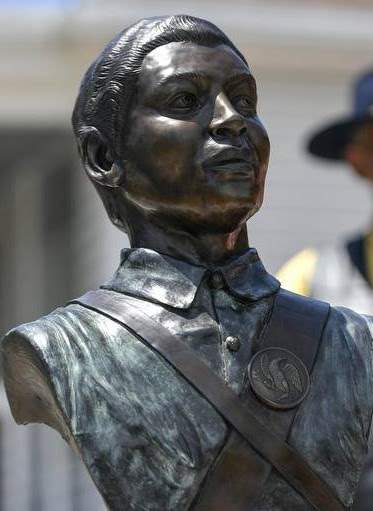
 

BUFFALOSTATUE ME 072216 DRE (6)

Cathay Williams (AKA Private William Cathay)  Willam Allan Cultural Center & Museum, Leavenworth, Kansas

This veteran salutes you, Private Williams.


In the late 1800’s, Raton was a bustling railroad town with many boarding houses and hotels. These were just two them.

Until next time, remember . . .

The door is always open, and the Kettle is always on.

Categories: Uncategorized | Tags: , , , , , , , , | Leave a comment

A Simple Question: “What do You write?”

It’s a simple question, “What do you write?” I’m asked it often, which got me thinking.

Every writer focuses on a specific genre; it is their brand, their identity. I have many writer friends. Three stand out to me, as truly knowing who they are as a writer, Molly Jo RealySierra Donavan, and Brent A. Harris.

molly jo 3

Molly Jo Realy, author of NOLA

Molly Jo writes “location mysteries,” a genre she created for her up-coming novel NOLA, set in New Orleans, Louisiana. The location is essential and integral to the plot. The mystery can only happen in this setting. If the tale, if it took place in another city, would be altered significantly. In NOLA, a young woman’s trip to the Crescent City takes some unexpected turns as only the old city can dish up – there’s fried alligator and voodoo, too.

Sierra writes “sweet romances.” These romances do not have the “heat” of other romances with little or no steamy scenes or foul language. Her most recent book, Do Not Open ‘Til Christmas, tells the story of what happens “when a Scrooge-like boss and a determined young woman have to work together during the holidays.”

Brent writes “alternate history.” This type of historical fiction is referred to as conjectural or speculative because though based on historical events it asks “what if?” at a crucial point in the action. In his recent book, A Time of Need, the question is “What if George Washington fought for the British?”

I ask myself, “What do you write?” The fast and simple response is historical fiction, primarily romance. This historical romance isn’t accurate. A better answer would be Victorian romance. Even that is too broad.

So with a cup of vanilla chai tea, I settled into my chair to define for myself the historical period I write.

First, what is Historical Fiction? According to Dictionary.com, it is “the genre of literature, film, etc., comprising narratives that take place in the past and are characterized chiefly by an imaginative reconstruction of historical events and personages.” How far back in time does a work need to be to be considered “historical”? Depending on whom you ask that changes. According to the Historical Novel Society, how it is defined is debatable, but they considered a story historical if set fifty years or more in the past and the author is working from research and not personal experience.  So using this definition, and given I was born in 1961, anything I write set before 1960 is historical fiction.

I could use the term Victorian as I write primarily during the years between the Civil War and World War I (1865 – 1914), which overlaps with the Victorian period (1837 – 1901) of the British Empire and La Belle Époque (1871 – 1914) of continental Europe.  True, the United States did follow some of the English mannerisms and morals of the time, but I write stories take place, not in England or Europe, but America.

In the United States, 1865 – 1890 is called the Gilded Age and is followed by the Progressive Age (1890 – 1914). Mark Twain coined the term Gilded Age when he titled his 1873 novel The Gilded Age: A Tale of Today. Though not well known, the story is remarkable because it is the only book Twain wrote with a collaborator, Charles Dudley Warner.   It satirized the post-Civil War era’s greed and political corruption. Twain and Warner took the title from Shakespeare’s King John  “To gild refined gold, to paint the lily . . . is wasteful and ridiculous excess.” (Act IV, scene 2). They did not mean it as a compliment.

This period is a tapestry of vast contrasts. The rich lived lavishly, building seaside mansions. The poor worked twelve-hour days, six to seven days a week for barely enough pay to support their families. However, it is also the time of social reform, including the rise of the unions that brought in the eight-hour workday and end to child labor. In spite of the political corruption, it was also a time of political reform; civil services workers had to start taking a test to get their jobs, reducing cronyism. It was also the time of the women’s suffrage movement.

Territory

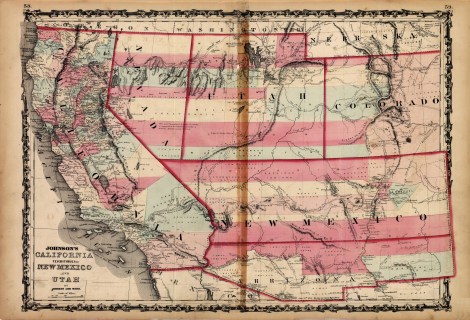
Western Territory Map

This is the background of my historical period, but my stories take place mainly in the western regions of the United States: the territories of Arizona, Colorado, New Mexico, and Utah; and the states of California and Nevada. Historians call these years the Wild West period (1865 – 1895).  It is a time of westward expansion, wagon trains, homesteaders, gold and silver, bandits and cowboys.

Now that I have defined the historical period, what about my writing?

Princess Victoria

The Princess of Sweetwater

I just completed a short novel, The Princess of Sweetwater, which I am presenting to prospective agents. The story of a privileged  La Belle Époque aristocrat, Princess Victoria, in 1886, who runs away from the Gilded Age city of San Francisco to a small town in Southern California and falls in love with a rancher. It has a romance, life on a Californian ranch, and some international intrigue.

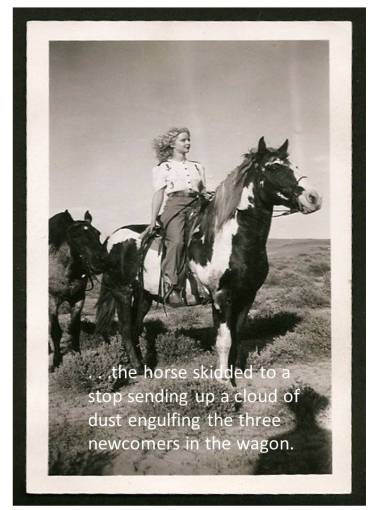
Sally

Sally Ann Porter

My current work-in-progress (WIP) is a novel, Sally of Rancho Terra Linda (working title).   Though still very much a rough outline and a loose series of scenes, it is the story of a young woman in 1898 territorial New Mexico that must deal with her father’s remarriage to a Chicago widow and new siblings while still getting her chores on the ranch done. Planned subplots include a murder and a romance with the local doctor.

steampunk-3158002_1280

Mary Cogswoth

A third story, on the back burner, is The Cogsworth Files (working title). It’s a serial tale about Mary Cogsworth, a Secret Service Agent, and her companion, Seamus, an Irish wolfhound. Together they work to protect America in 1885. It has elements of romance, western, and steampunk.

Victoria’s story is clearly a romance set against the backdrop of “fish out of water” story during the Gilded Age in a small town with some elements of a western.

Sally’s story is more of a western set against the backdrop of a clash between Progressive Age expectations with western reality.

Mary’s story is more an adventure story set against the backdrop of the Gilded Age featuring trains and steam-powered gadgets.


manuscript

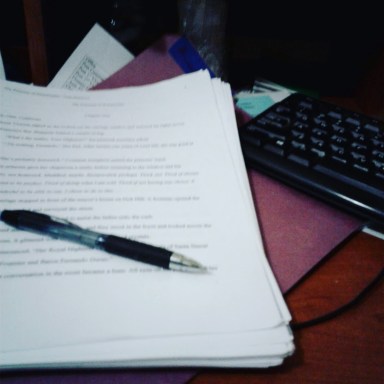
Manuscript

So again, I ask, “What do you write?” After some thought, I would narrow down my genre to “Gilded-Age/Progressive-Age/western historical fiction” But that’s a bit of a mouthful, so maybe “Late 19th century historical fiction.”

Will I stray out of this historical period? Yes, every once in a while I will. I’ve written some contemporary romances, as well as stories set in the 1960’s, 1920’s, 1500’s, and the first century.

Two more questions: Why do I prefer historical fiction? And why late 19th-century? I grew up reading historical fiction, history books, and biographies. I found it fascinating. I chose this period because I live an area where there are ample sources for me to explore the history and geography.

I’ve shared some of my explorations with you in the past and will continue to share those stories with you over a nice cup of tea.

chai-975685_1280

Vanilla Chai

Remember the door is always open, and the kettle is always on.

Categories: Uncategorized | Tags: , , , , , , , , , | Leave a comment

Blog at WordPress.com.