
It’s a simple question, “What do you write?” I’m asked it often, which got me thinking.
Every writer focuses on a specific genre; it is their brand, their identity. I have many writer friends. Three stand out to me, as truly knowing who they are as a writer, Molly Jo Realy, Sierra Donavan, and Brent A. Harris.

Molly Jo Realy, author of NOLA
Molly Jo writes “location mysteries,” a genre she created for her up-coming novel NOLA, set in New Orleans, Louisiana. The location is essential and integral to the plot. The mystery can only happen in this setting. If the tale, if it took place in another city, would be altered significantly. In NOLA, a young woman’s trip to the Crescent City takes some unexpected turns as only the old city can dish up – there’s fried alligator and voodoo, too.


Sierra writes “sweet romances.” These romances do not have the “heat” of other romances with little or no steamy scenes or foul language. Her most recent book, Do Not Open ‘Til Christmas, tells the story of what happens “when a Scrooge-like boss and a determined young woman have to work together during the holidays.”


Brent writes “alternate history.” This type of historical fiction is referred to as conjectural or speculative because though based on historical events it asks “what if?” at a crucial point in the action. In his recent book, A Time of Need, the question is “What if George Washington fought for the British?”
I ask myself, “What do you write?” The fast and simple response is historical fiction, primarily romance. This historical romance isn’t accurate. A better answer would be Victorian romance. Even that is too broad.
So with a cup of vanilla chai tea, I settled into my chair to define for myself the historical period I write.
First, what is Historical Fiction? According to Dictionary.com, it is “the genre of literature, film, etc., comprising narratives that take place in the past and are characterized chiefly by an imaginative reconstruction of historical events and personages.” How far back in time does a work need to be to be considered “historical”? Depending on whom you ask that changes. According to the Historical Novel Society, how it is defined is debatable, but they considered a story historical if set fifty years or more in the past and the author is working from research and not personal experience. So using this definition, and given I was born in 1961, anything I write set before 1960 is historical fiction.
I could use the term Victorian as I write primarily during the years between the Civil War and World War I (1865 – 1914), which overlaps with the Victorian period (1837 – 1901) of the British Empire and La Belle Époque (1871 – 1914) of continental Europe. True, the United States did follow some of the English mannerisms and morals of the time, but I write stories take place, not in England or Europe, but America.
In the United States, 1865 – 1890 is called the Gilded Age and is followed by the Progressive Age (1890 – 1914). Mark Twain coined the term Gilded Age when he titled his 1873 novel The Gilded Age: A Tale of Today. Though not well known, the story is remarkable because it is the only book Twain wrote with a collaborator, Charles Dudley Warner. It satirized the post-Civil War era’s greed and political corruption. Twain and Warner took the title from Shakespeare’s King John “To gild refined gold, to paint the lily . . . is wasteful and ridiculous excess.” (Act IV, scene 2). They did not mean it as a compliment.


This period is a tapestry of vast contrasts. The rich lived lavishly, building seaside mansions. The poor worked twelve-hour days, six to seven days a week for barely enough pay to support their families. However, it is also the time of social reform, including the rise of the unions that brought in the eight-hour workday and end to child labor. In spite of the political corruption, it was also a time of political reform; civil services workers had to start taking a test to get their jobs, reducing cronyism. It was also the time of the women’s suffrage movement.
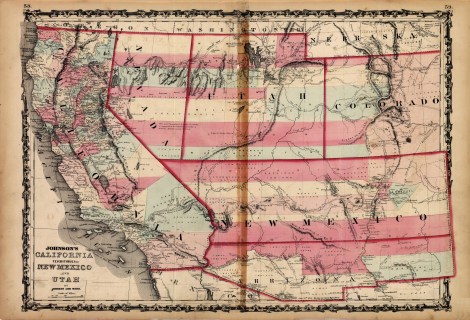
Western Territory Map
This is the background of my historical period, but my stories take place mainly in the western regions of the United States: the territories of Arizona, Colorado, New Mexico, and Utah; and the states of California and Nevada. Historians call these years the Wild West period (1865 – 1895). It is a time of westward expansion, wagon trains, homesteaders, gold and silver, bandits and cowboys.
Now that I have defined the historical period, what about my writing?

The Princess of Sweetwater
I just completed a short novel, The Princess of Sweetwater, which I am presenting to prospective agents. The story of a privileged La Belle Époque aristocrat, Princess Victoria, in 1886, who runs away from the Gilded Age city of San Francisco to a small town in Southern California and falls in love with a rancher. It has a romance, life on a Californian ranch, and some international intrigue.
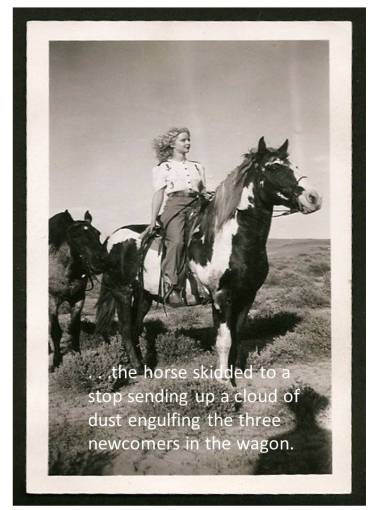
Sally Ann Porter
My current work-in-progress (WIP) is a novel, Sally of Rancho Terra Linda (working title). Though still very much a rough outline and a loose series of scenes, it is the story of a young woman in 1898 territorial New Mexico that must deal with her father’s remarriage to a Chicago widow and new siblings while still getting her chores on the ranch done. Planned subplots include a murder and a romance with the local doctor.

Mary Cogswoth
A third story, on the back burner, is The Cogsworth Files (working title). It’s a serial tale about Mary Cogsworth, a Secret Service Agent, and her companion, Seamus, an Irish wolfhound. Together they work to protect America in 1885. It has elements of romance, western, and steampunk.
Victoria’s story is clearly a romance set against the backdrop of “fish out of water” story during the Gilded Age in a small town with some elements of a western.
Sally’s story is more of a western set against the backdrop of a clash between Progressive Age expectations with western reality.
Mary’s story is more an adventure story set against the backdrop of the Gilded Age featuring trains and steam-powered gadgets.
Manuscript
So again, I ask, “What do you write?” After some thought, I would narrow down my genre to “Gilded-Age/Progressive-Age/western historical fiction” But that’s a bit of a mouthful, so maybe “Late 19th century historical fiction.”
Will I stray out of this historical period? Yes, every once in a while I will. I’ve written some contemporary romances, as well as stories set in the 1960’s, 1920’s, 1500’s, and the first century.
Two more questions: Why do I prefer historical fiction? And why late 19th-century? I grew up reading historical fiction, history books, and biographies. I found it fascinating. I chose this period because I live an area where there are ample sources for me to explore the history and geography.
I’ve shared some of my explorations with you in the past and will continue to share those stories with you over a nice cup of tea.

Vanilla Chai
Remember the door is always open, and the kettle is always on.


 Tess DeGroot
Recent Comments